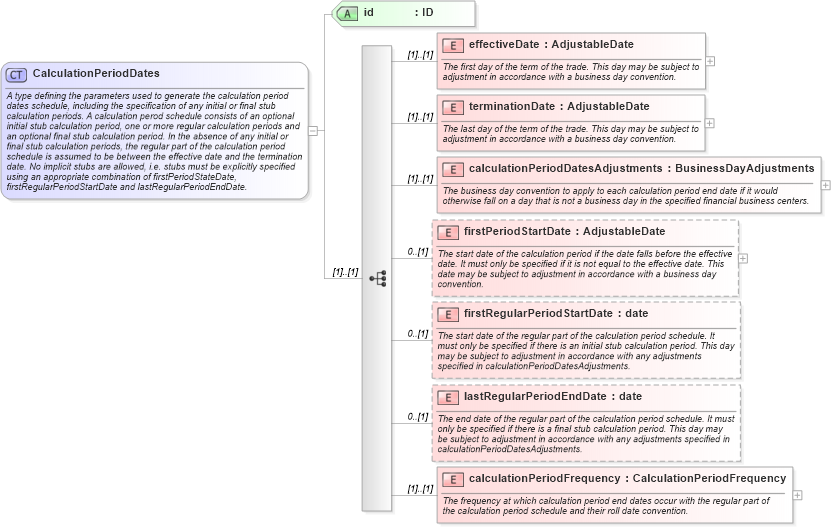
<xsd:complexType name="CalculationPeriodDates">
    <xsd:annotation>
        <xsd:documentation xml:lang="en">A type defining the parameters used to generate the calculation period dates schedule, including the specification of any initial or final stub calculation periods. A calculation perod schedule consists of an optional initial stub calculation period, one or more regular calculation periods and an optional final stub calculation period. In the absence of any initial or final stub calculation periods, the regular part of the calculation period schedule is assumed to be between the effective date and the termination date. No implicit stubs are allowed, i.e. stubs must be explicitly specified using an appropriate combination of firstPeriodStateDate, firstRegularPeriodStartDate and lastRegularPeriodEndDate.</xsd:documentation>
    </xsd:annotation>
    <xsd:sequence>
        <xsd:element name="effectiveDate" type="AdjustableDate">
            <xsd:annotation>
                <xsd:documentation xml:lang="en">The first day of the term of the trade. This day may be subject to adjustment in accordance with a business day convention.</xsd:documentation>
            </xsd:annotation>
        </xsd:element>
        <xsd:element name="terminationDate" type="AdjustableDate">
            <xsd:annotation>
                <xsd:documentation xml:lang="en">The last day of the term of the trade. This day may be subject to adjustment in accordance with a business day convention.</xsd:documentation>
            </xsd:annotation>
        </xsd:element>
        <xsd:element name="calculationPeriodDatesAdjustments" type="BusinessDayAdjustments">
            <xsd:annotation>
                <xsd:documentation xml:lang="en">The business day convention to apply to each calculation period end date if it would otherwise fall on a day that is not a business day in the specified financial business centers.</xsd:documentation>
            </xsd:annotation>
        </xsd:element>
        <xsd:element name="firstPeriodStartDate" type="AdjustableDate" minOccurs="0">
            <xsd:annotation>
                <xsd:documentation xml:lang="en">The start date of the calculation period if the date falls before the effective date. It must only be specified if it is not equal to the effective date. This date may be subject to adjustment in accordance with a business day convention.</xsd:documentation>
            </xsd:annotation>
        </xsd:element>
        <xsd:element name="firstRegularPeriodStartDate" type="xsd:date" minOccurs="0">
            <xsd:annotation>
                <xsd:documentation xml:lang="en">The start date of the regular part of the calculation period schedule. It must only be specified if there is an initial stub calculation period. This day may be subject to adjustment in accordance with any adjustments specified in calculationPeriodDatesAdjustments.</xsd:documentation>
            </xsd:annotation>
        </xsd:element>
        <xsd:element name="lastRegularPeriodEndDate" type="xsd:date" minOccurs="0">
            <xsd:annotation>
                <xsd:documentation xml:lang="en">The end date of the regular part of the calculation period schedule. It must only be specified if there is a final stub calculation period. This day may be subject to adjustment in accordance with any adjustments specified in calculationPeriodDatesAdjustments.</xsd:documentation>
            </xsd:annotation>
        </xsd:element>
        <xsd:element name="calculationPeriodFrequency" type="CalculationPeriodFrequency">
            <xsd:annotation>
                <xsd:documentation xml:lang="en">The frequency at which calculation period end dates occur with the regular part of the calculation period schedule and their roll date convention.</xsd:documentation>
            </xsd:annotation>
        </xsd:element>
    </xsd:sequence>
    <xsd:attribute name="id" use="required" type="xsd:ID" />
</xsd:complexType>
|
 XSD Schema Diagram: