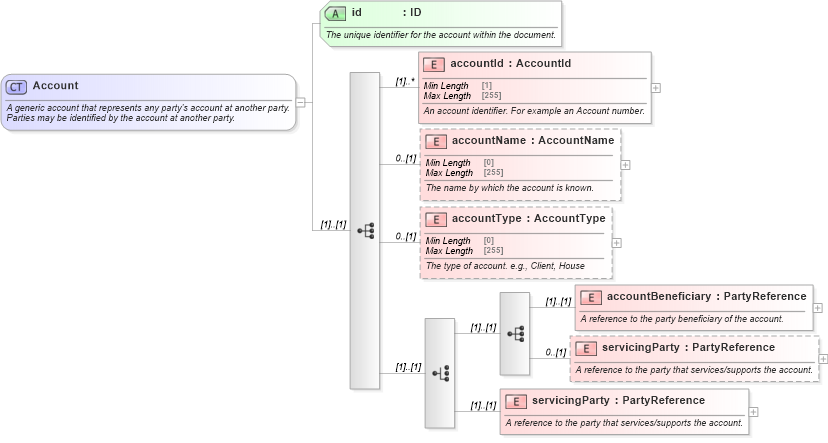
<xsd:complexType name="Account">
    <xsd:annotation>
        <xsd:documentation xml:lang="en">A generic account that represents any party's account at another party. Parties may be identified by the account at another party.</xsd:documentation>
    </xsd:annotation>
    <xsd:sequence>
        <xsd:element name="accountId" type="AccountId" maxOccurs="unbounded">
            <xsd:annotation>
                <xsd:documentation xml:lang="en">An account identifier. For example an Account number.</xsd:documentation>
            </xsd:annotation>
        </xsd:element>
        <xsd:element name="accountName" type="AccountName" minOccurs="0">
            <xsd:annotation>
                <xsd:documentation xml:lang="en">The name by which the account is known.</xsd:documentation>
            </xsd:annotation>
        </xsd:element>
        <xsd:element name="accountType" type="AccountType" minOccurs="0">
            <xsd:annotation>
                <xsd:documentation xml:lang="en">The type of account. e.g., Client, House</xsd:documentation>
            </xsd:annotation>
        </xsd:element>
        <xsd:choice>
            <xsd:sequence>
                <xsd:element name="accountBeneficiary" type="PartyReference">
                    <xsd:annotation>
                        <xsd:documentation xml:lang="en">A reference to the party beneficiary of the account.</xsd:documentation>
                    </xsd:annotation>
                </xsd:element>
                <xsd:element name="servicingParty" type="PartyReference" minOccurs="0">
                    <xsd:annotation>
                        <xsd:documentation xml:lang="en">A reference to the party that services/supports the account.</xsd:documentation>
                    </xsd:annotation>
                </xsd:element>
            </xsd:sequence>
            <xsd:element name="servicingParty" type="PartyReference">
                <xsd:annotation>
                    <xsd:documentation xml:lang="en">A reference to the party that services/supports the account.</xsd:documentation>
                </xsd:annotation>
            </xsd:element>
        </xsd:choice>
    </xsd:sequence>
    <xsd:attribute name="id" type="xsd:ID" use="required">
        <xsd:annotation>
            <xsd:documentation xml:lang="en">The unique identifier for the account within the document.</xsd:documentation>
        </xsd:annotation>
    </xsd:attribute>
</xsd:complexType>
|
 XSD Schema Diagram: