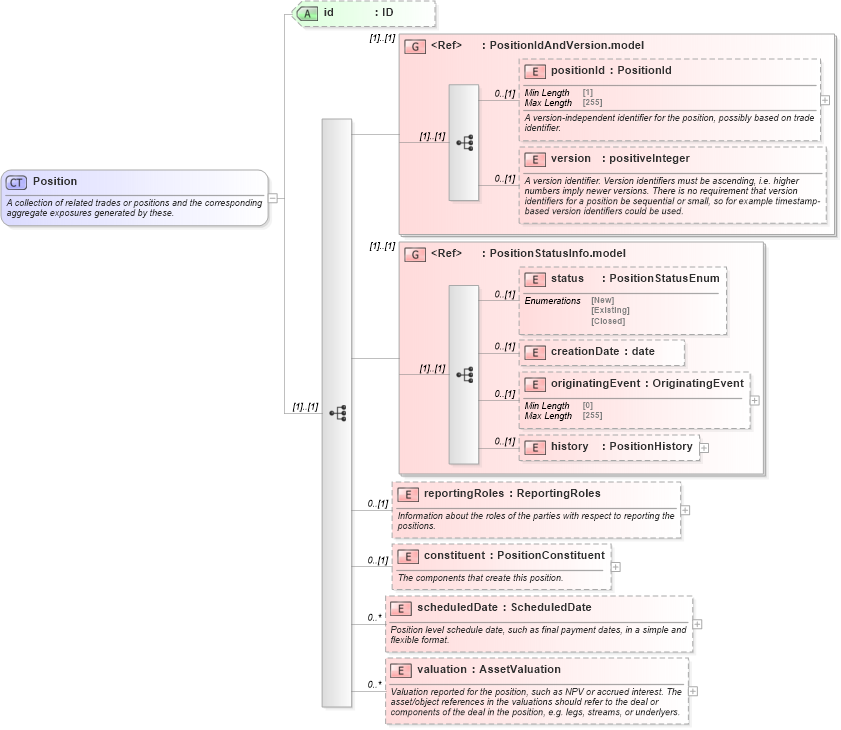
<xsd:complexType name="Position">
    <xsd:annotation>
        <xsd:documentation xml:lang="en">A collection of related trades or positions and the corresponding aggregate exposures generated by these.</xsd:documentation>
    </xsd:annotation>
    <xsd:sequence>
        <xsd:group ref="PositionIdAndVersion.model" />
        <xsd:group ref="PositionStatusInfo.model" />
        <xsd:element name="reportingRoles" type="ReportingRoles" minOccurs="0">
            <xsd:annotation>
                <xsd:documentation xml:lang="en">Information about the roles of the parties with respect to reporting the positions.</xsd:documentation>
            </xsd:annotation>
        </xsd:element>
        <xsd:element name="constituent" type="PositionConstituent" minOccurs="0">
            <xsd:annotation>
                <xsd:documentation xml:lang="en">The components that create this position.</xsd:documentation>
            </xsd:annotation>
        </xsd:element>
        <xsd:element name="scheduledDate" type="ScheduledDate" minOccurs="0" maxOccurs="unbounded">
            <xsd:annotation>
                <xsd:documentation xml:lang="en">Position level schedule date, such as final payment dates, in a simple and flexible format.</xsd:documentation>
            </xsd:annotation>
        </xsd:element>
        <xsd:element name="valuation" type="AssetValuation" minOccurs="0" maxOccurs="unbounded">
            <xsd:annotation>
                <xsd:documentation xml:lang="en">Valuation reported for the position, such as NPV or accrued interest. The asset/object references in the valuations should refer to the deal or components of the deal in the position, e.g. legs, streams, or underlyers.</xsd:documentation>
            </xsd:annotation>
        </xsd:element>
    </xsd:sequence>
    <xsd:attribute name="id" type="xsd:ID" />
</xsd:complexType>
|
 XSD Schema Diagram: