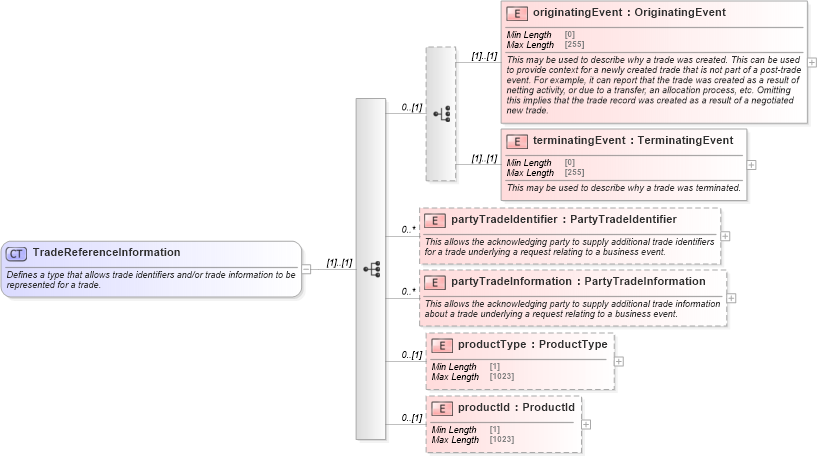
<xsd:complexType name="TradeReferenceInformation">
    <xsd:annotation>
        <xsd:documentation xml:lang="en">Defines a type that allows trade identifiers and/or trade information to be represented for a trade.</xsd:documentation>
    </xsd:annotation>
    <xsd:sequence>
        <xsd:choice minOccurs="0">
            <xsd:element name="originatingEvent" type="OriginatingEvent">
                <xsd:annotation>
                    <xsd:documentation xml:lang="en">This may be used to describe why a trade was created. This can be used to provide context for a newly created trade that is not part of a post-trade event. For example, it can report that the trade was created as a result of netting activity, or due to a transfer, an allocation process, etc. Omitting this implies that the trade record was created as a result of a negotiated new trade.</xsd:documentation>
                </xsd:annotation>
            </xsd:element>
            <xsd:element name="terminatingEvent" type="TerminatingEvent">
                <xsd:annotation>
                    <xsd:documentation xml:lang="en">This may be used to describe why a trade was terminated.</xsd:documentation>
                </xsd:annotation>
            </xsd:element>
        </xsd:choice>
        <xsd:element name="partyTradeIdentifier" type="PartyTradeIdentifier" minOccurs="0" maxOccurs="unbounded">
            <xsd:annotation>
                <xsd:documentation xml:lang="en">This allows the acknowledging party to supply additional trade identifiers for a trade underlying a request relating to a business event.</xsd:documentation>
            </xsd:annotation>
        </xsd:element>
        <xsd:element name="partyTradeInformation" type="PartyTradeInformation" minOccurs="0" maxOccurs="unbounded">
            <xsd:annotation>
                <xsd:documentation xml:lang="en">This allows the acknowledging party to supply additional trade information about a trade underlying a request relating to a business event.</xsd:documentation>
            </xsd:annotation>
        </xsd:element>
        <xsd:element name="productType" type="ProductType" minOccurs="0" />
        <xsd:element name="productId" type="ProductId" minOccurs="0" />
    </xsd:sequence>
</xsd:complexType>
|
 XSD Schema Diagram: