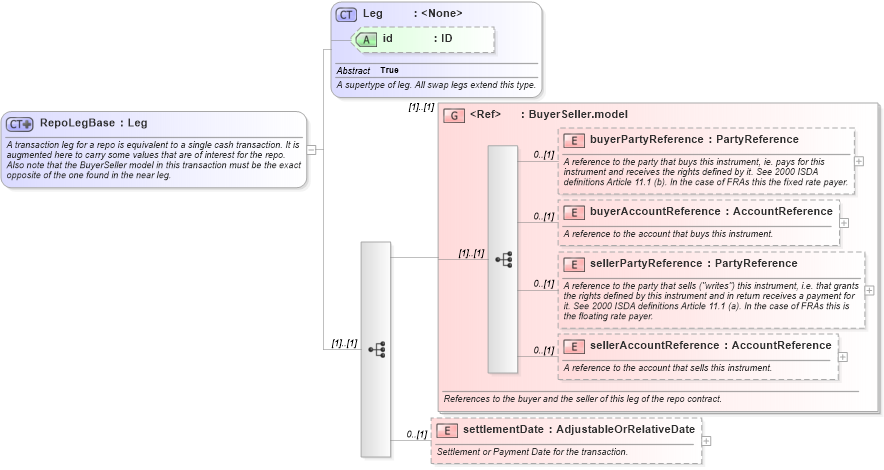
<xsd:complexType name="RepoLegBase">
    <xsd:annotation>
        <xsd:documentation xml:lang="en">A transaction leg for a repo is equivalent to a single cash transaction. It is augmented here to carry some values that are of interest for the repo. Also note that the BuyerSeller model in this transaction must be the exact opposite of the one found in the near leg.</xsd:documentation>
    </xsd:annotation>
    <xsd:complexContent>
        <!--2015-02-23: Sec WG: extends "leg" type-->
        <!--2015-02-23: Sec WG: agreed to remove attribute "id", instead extension from base class "Leg" which already includes attribute "id"-->
        <xsd:extension base="Leg">
            <xsd:sequence>
                <!--2015-02-23: Sec WG: agreed to remove element "id" of type “RepoLegId" until we have requirement for identifying the leg -->
                <!--<xsd:element name="id" type="RepoLegId" minOccurs="0" maxOccurs="unbounded">
                                                <xsd:annotation>
                                                        <xsd:documentation xml:lang="en">A reference to a party transaction ID. This is provided in case the message creator wishes to record that the repo leg is associated with a particular trade identifier; typically this can be used for identifying a UTI associated with the leg.</xsd:documentation>
                                                </xsd:annotation>
                                        </xsd:element>-->
                <xsd:group ref="BuyerSeller.model">
                    <xsd:annotation>
                        <xsd:documentation xml:lang="en">References to the buyer and the seller of this leg of the repo contract.</xsd:documentation>
                    </xsd:annotation>
                </xsd:group>
                <!--<xsd:annotation>
                                                        <xsd:documentation xml:lang="en">A group which has cash settlement elements.</xsd:documentation>
                                                        <xsd:appinfo>
                                                                <view:override view="recordkeeping" minOccurs="1"/>
                                                        </xsd:appinfo>
                                                </xsd:annotation>-->
                <xsd:element name="settlementDate" type="AdjustableOrRelativeDate" minOccurs="0">
                    <xsd:annotation>
                        <xsd:documentation xml:lang="en">Settlement or Payment Date for the transaction.</xsd:documentation>
                    </xsd:annotation>
                </xsd:element>
            </xsd:sequence>
        </xsd:extension>
    </xsd:complexContent>
</xsd:complexType>
|
 XSD Schema Diagram: