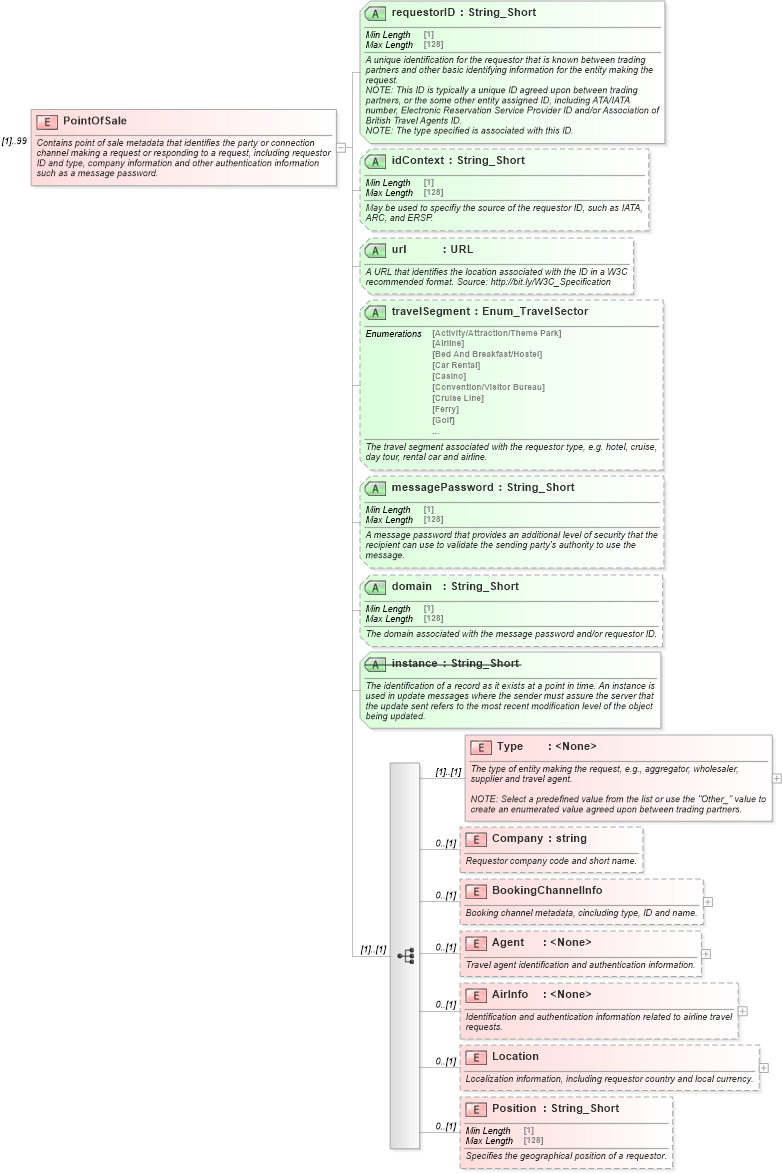
<xsd:element name="PointOfSale" maxOccurs="99">
    <xsd:annotation>
        <xsd:documentation xml:lang="en">Contains point of sale metadata that identifies the party or connection channel making a request or responding to a request, including requestor ID and type, company information and other authentication information such as a message password.</xsd:documentation>
    </xsd:annotation>
    <xsd:complexType>
        <xsd:sequence>
            <xsd:element name="Type">
                <xsd:annotation>
                    <xsd:documentation xml:lang="en">The type of entity making the request, e.g., aggregator, wholesaler, supplier and travel agent.

NOTE: Select a predefined value from the list or use the "Other_" value to create an enumerated value agreed upon between trading partners. </xsd:documentation>
                </xsd:annotation>
                <xsd:complexType>
                    <xsd:attribute name="extension" type="ota:String_EnumExtension" use="optional">
                        <xsd:annotation>
                            <xsd:documentation xml:lang="en">A string value that represents an "Other_", or extended, enumerated value agreed upon between trading partners.

NOTE: It is recommended that you submit an OpenTravel comment to formally add any extended enumerations to the OpenTravel Specification to maximize trading partner interoperability.</xsd:documentation>
                        </xsd:annotation>
                    </xsd:attribute>
                </xsd:complexType>
            </xsd:element>
            <xsd:element name="Company" type="xsd:string" minOccurs="0">
                <xsd:annotation>
                    <xsd:documentation xml:lang="en">Requestor company code and short name.</xsd:documentation>
                </xsd:annotation>
            </xsd:element>
            <xsd:element name="BookingChannelInfo" minOccurs="0">
                <xsd:annotation>
                    <xsd:documentation xml:lang="en">Booking channel metadata, cincluding type, ID and name.</xsd:documentation>
                </xsd:annotation>
                <xsd:complexType>
                    <xsd:sequence minOccurs="0">
                        <xsd:element name="Type">
                            <xsd:annotation>
                                <xsd:documentation xml:lang="en">The type of booking channel, e.g. Global Distribution System (GDS), Alternative Distribution System (ADS), etc.</xsd:documentation>
                            </xsd:annotation>
                            <xsd:complexType>
                                <xsd:simpleContent>
                                    <xsd:extension base="Enum_BookingChannel">
                                        <xsd:attribute name="extension" type="ota:String_EnumExtension" use="optional">
                                            <xsd:annotation>
                                                <xsd:documentation xml:lang="en">A string value that represents an "Other_", or extended, enumerated value agreed upon between trading partners.

NOTE: It is recommended that you submit an OpenTravel comment to formally add any extended enumerations to the OpenTravel Specification to maximize trading partner interoperability.</xsd:documentation>
                                            </xsd:annotation>
                                        </xsd:attribute>
                                    </xsd:extension>
                                </xsd:simpleContent>
                            </xsd:complexType>
                        </xsd:element>
                        <xsd:element name="Name" type="xsd:string" minOccurs="0">
                            <xsd:annotation>
                                <xsd:documentation xml:lang="en">The code and short nameof the booking channel.</xsd:documentation>
                            </xsd:annotation>
                        </xsd:element>
                    </xsd:sequence>
                    <xsd:attribute name="primaryInd" type="xsd:boolean">
                        <xsd:annotation>
                            <xsd:documentation xml:lang="en">Indicates whether the enumerated booking channel type is the primary means of connectivity used by the source.</xsd:documentation>
                        </xsd:annotation>
                    </xsd:attribute>
                    <xsd:attribute name="id" type="String_Short" use="optional">
                        <xsd:annotation>
                            <xsd:documentation xml:lang="en">A unique booking channel ID.</xsd:documentation>
                        </xsd:annotation>
                    </xsd:attribute>
                </xsd:complexType>
            </xsd:element>
            <xsd:element name="Agent" minOccurs="0">
                <xsd:annotation>
                    <xsd:documentation xml:lang="en">Travel agent identification and authentication information.</xsd:documentation>
                </xsd:annotation>
                <xsd:complexType>
                    <xsd:attribute name="sine" type="String_Short" use="optional">
                        <xsd:annotation>
                            <xsd:documentation xml:lang="en">A unique identification of an agent location that typically includes a four digit personal identification number, a two character agent identifier and a duty code.</xsd:documentation>
                        </xsd:annotation>
                    </xsd:attribute>
                    <xsd:attribute name="pseudoCityCode" type="Code_PseudoCity" use="optional">
                        <xsd:annotation>
                            <xsd:documentation xml:lang="en">A three to five character code (alpha, numeric, or combination) that specifies a GDS code used to identify a travel agency location. Typically required when using negotiated rates to associate the rates to an agency.</xsd:documentation>
                        </xsd:annotation>
                    </xsd:attribute>
                    <xsd:attribute name="dutyCode" type="Code_AgentDuty" use="optional">
                        <xsd:annotation>
                            <xsd:documentation xml:lang="en">Typically a two to five character code (alpha, numeric, or combination) code that specifies a travel agents duty code that is used for agency authentication.</xsd:documentation>
                        </xsd:annotation>
                    </xsd:attribute>
                    <xsd:attribute name="terminalID" type="String_Short" use="optional">
                        <xsd:annotation>
                            <xsd:documentation xml:lang="en">The electronic address of the device from which information is entered.</xsd:documentation>
                        </xsd:annotation>
                    </xsd:attribute>
                </xsd:complexType>
            </xsd:element>
            <xsd:element name="AirInfo" minOccurs="0">
                <xsd:annotation>
                    <xsd:documentation xml:lang="en">Identification and authentication information related to airline travel requests.</xsd:documentation>
                </xsd:annotation>
                <xsd:complexType>
                    <xsd:attribute name="ERSP" type="Code_IATA_ERSP" use="optional">
                        <xsd:annotation>
                            <xsd:documentation xml:lang="en">A unique IATA (in cooperation with ATA and ARC) code used as a means of identification when performing online bookings with airlines. Source: http://bit.ly/OTA2_ERSP</xsd:documentation>
                        </xsd:annotation>
                    </xsd:attribute>
                    <xsd:attribute name="airlineVendorID" type="Code_IATA_AirlineID" use="optional">
                        <xsd:annotation>
                            <xsd:documentation xml:lang="en">A two character IATA assigned airline code. Source: http://bit.ly/OTA2_IATA_AirlineCode</xsd:documentation>
                        </xsd:annotation>
                    </xsd:attribute>
                    <xsd:attribute name="airportCode">
                        <xsd:annotation>
                            <xsd:documentation xml:lang="en">A three character IATA assigned airport code. Source: http://bit.ly/OTA2_IATA_AirportCodes</xsd:documentation>
                        </xsd:annotation>
                    </xsd:attribute>
                    <xsd:attribute name="firstDeparturePoint" type="Code_IATA_Airport" use="optional">
                        <xsd:annotation>
                            <xsd:documentation xml:lang="en">An IATA airline or city code for the point of first departure in a trip. Source: http://bit.ly/OTA2_IATA_AirportOrLocationCode</xsd:documentation>
                        </xsd:annotation>
                    </xsd:attribute>
                </xsd:complexType>
            </xsd:element>
            <xsd:element name="Location" minOccurs="0">
                <xsd:annotation>
                    <xsd:documentation xml:lang="en">Localization information, including requestor country and local currency.</xsd:documentation>
                </xsd:annotation>
                <xsd:complexType>
                    <xsd:sequence>
                        <xsd:element name="TimeZone" type="TimeZone" minOccurs="0">
                            <xsd:annotation>
                                <xsd:documentation xml:lang="en">The time zone of the requestor.</xsd:documentation>
                            </xsd:annotation>
                        </xsd:element>
                    </xsd:sequence>
                    <xsd:attribute name="ISOCountry">
                        <xsd:annotation>
                            <xsd:documentation xml:lang="en">The country code of the requesting party in ISO 3166 format. Source: http://bit.ly/OTA2_ISO3166</xsd:documentation>
                        </xsd:annotation>
                    </xsd:attribute>
                    <xsd:attribute name="ISOCurrency" type="Code_ISO_Currency" use="optional">
                        <xsd:annotation>
                            <xsd:documentation xml:lang="en">Specifies a three character currency code in ISO 4217 format. Source: http://bit.ly/OTA2_ISO4217</xsd:documentation>
                        </xsd:annotation>
                    </xsd:attribute>
                </xsd:complexType>
            </xsd:element>
            <xsd:element name="Position" type="String_Short" minOccurs="0">
                <xsd:annotation>
                    <xsd:documentation xml:lang="en">Specifies the geographical position of a requestor.</xsd:documentation>
                </xsd:annotation>
            </xsd:element>
        </xsd:sequence>
        <xsd:attribute name="requestorID" type="String_Short" use="required">
            <xsd:annotation>
                <xsd:documentation xml:lang="en">A unique identification for the requestor that is known between trading partners and other basic identifying information for the entity making the request.
NOTE: This ID is typically a unique ID agreed upon between trading partners, or the some other entity assigned ID, including ATA/IATA number, Electronic Reservation Service Provider ID and/or Association of British Travel Agents ID.
NOTE: The type specified is associated with this ID.</xsd:documentation>
            </xsd:annotation>
        </xsd:attribute>
        <xsd:attribute name="idContext" type="String_Short" use="optional">
            <xsd:annotation>
                <xsd:documentation xml:lang="en">May be used to specifiy the source of the requestor ID, such as IATA, ARC, and ERSP.</xsd:documentation>
            </xsd:annotation>
        </xsd:attribute>
        <xsd:attribute name="url" type="URL" use="optional">
            <xsd:annotation>
                <xsd:documentation xml:lang="en">A URL that identifies the location associated with the ID in a W3C recommended format. Source: http://bit.ly/W3C_Specification</xsd:documentation>
            </xsd:annotation>
        </xsd:attribute>
        <xsd:attribute name="travelSegment" type="Enum_TravelSector">
            <xsd:annotation>
                <xsd:documentation xml:lang="en">The travel segment associated with the requestor type, e.g. hotel, cruise, day tour, rental car and airline.</xsd:documentation>
            </xsd:annotation>
        </xsd:attribute>
        <xsd:attribute name="messagePassword" type="String_Short" use="optional">
            <xsd:annotation>
                <xsd:documentation xml:lang="en">A message password that provides an additional level of security that the recipient can use to validate the sending party's authority to use the message.</xsd:documentation>
            </xsd:annotation>
        </xsd:attribute>
        <xsd:attribute name="domain" type="String_Short" use="optional">
            <xsd:annotation>
                <xsd:documentation xml:lang="en">The domain associated with the message password and/or requestor ID.</xsd:documentation>
            </xsd:annotation>
        </xsd:attribute>
        <xsd:attribute name="instance" type="String_Short" use="prohibited">
            <xsd:annotation>
                <xsd:documentation xml:lang="en">The identification of a record as it exists at a point in time. An instance is used in update messages where the sender must assure the server that the update sent refers to the most recent modification level of the object being updated.</xsd:documentation>
            </xsd:annotation>
        </xsd:attribute>
    </xsd:complexType>
</xsd:element>
|
 XSD Schema Diagram: