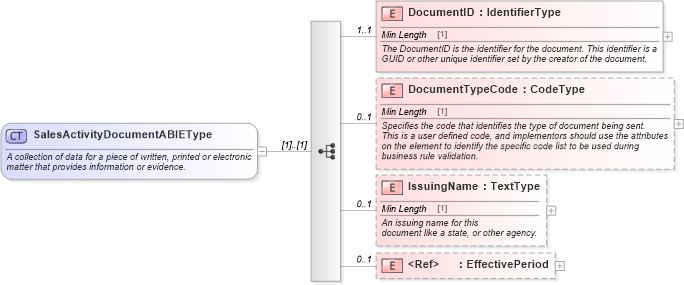
<xsd:complexType name="SalesActivityDocumentABIEType">
    <xsd:annotation>
        <xsd:documentation>
                A collection of data for a piece of written, printed or electronic
                matter that provides information or evidence.
            </xsd:documentation>
    </xsd:annotation>
    <xsd:sequence>
        <xsd:element maxOccurs="1" minOccurs="1" name="DocumentID" type="udt:IdentifierType">
            <xsd:annotation>
                <xsd:documentation source="http://www.starstandard.org/STAR/5">The DocumentID is the identifier for the document. This identifier is a GUID or other unique identifier set by the creator of the document.</xsd:documentation>
            </xsd:annotation>
        </xsd:element>
        <xsd:element maxOccurs="1" minOccurs="0" name="DocumentTypeCode" type="udt:CodeType">
            <xsd:annotation>
                <xsd:documentation source="http://www.starstandard.org/STAR/5">
                Specifies the code that identifies the type of document being sent.
                This is a user defined code, and implementors should use the attributes
                on the element to identify the specific code list to be used during
                business rule validation.
            </xsd:documentation>
            </xsd:annotation>
        </xsd:element>
        <xsd:element maxOccurs="1" minOccurs="0" name="IssuingName" type="udt:TextType">
            <xsd:annotation>
                <xsd:documentation source="http://www.starstandard.org/STAR/5"> An issuing name for this
                document like a state, or other agency. </xsd:documentation>
            </xsd:annotation>
        </xsd:element>
        <xsd:element maxOccurs="1" minOccurs="0" ref="EffectivePeriod">
            <xsd:annotation>
                <xsd:documentation>
                        The period which this document is effective
                    </xsd:documentation>
            </xsd:annotation>
        </xsd:element>
    </xsd:sequence>
</xsd:complexType>
|
 XSD Schema Diagram: