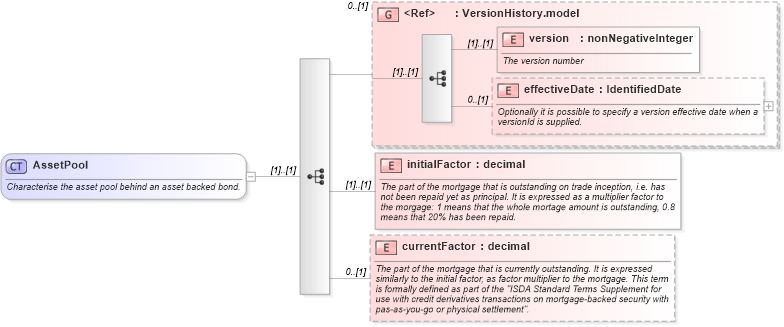
<xsd:complexType name="AssetPool">
    <xsd:annotation>
        <xsd:documentation xml:lang="en">Characterise the asset pool behind an asset backed bond.</xsd:documentation>
    </xsd:annotation>
    <xsd:sequence>
        <xsd:group ref="VersionHistory.model" minOccurs="0" />
        <xsd:element name="initialFactor" type="xsd:decimal">
            <xsd:annotation>
                <xsd:documentation xml:lang="en">The part of the mortgage that is outstanding on trade inception, i.e. has not been repaid yet as principal. It is expressed as a multiplier factor to the morgage: 1 means that the whole mortage amount is outstanding, 0.8 means that 20% has been repaid.</xsd:documentation>
            </xsd:annotation>
        </xsd:element>
        <xsd:element name="currentFactor" type="xsd:decimal" minOccurs="0">
            <xsd:annotation>
                <xsd:documentation xml:lang="en">The part of the mortgage that is currently outstanding. It is expressed similarly to the initial factor, as factor multiplier to the mortgage. This term is formally defined as part of the "ISDA Standard Terms Supplement for use with credit derivatives transactions on mortgage-backed security with pas-as-you-go or physical settlement".</xsd:documentation>
            </xsd:annotation>
        </xsd:element>
    </xsd:sequence>
</xsd:complexType>
|
 XSD Schema Diagram: