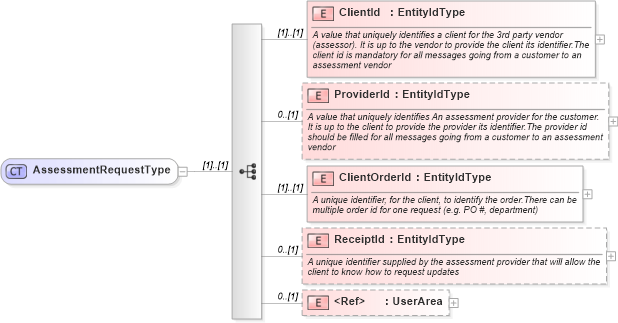
<xsd:complexType name="AssessmentRequestType">
    <xsd:sequence>
        <xsd:element name="ClientId" type="EntityIdType">
            <xsd:annotation>
                <xsd:documentation>A value that uniquely identifies a client for the 3rd party vendor (assessor). It is up to the vendor to provide the client its identifier.The client id is mandatory for all messages going from a customer to an assessment vendor</xsd:documentation>
            </xsd:annotation>
        </xsd:element>
        <xsd:element name="ProviderId" type="EntityIdType" minOccurs="0">
            <xsd:annotation>
                <xsd:documentation>A value that uniquely identifies An assessment provider for the customer. It is up to the client to provide the provider its identifier.The provider id should be filled for all messages going from a customer to an assessment vendor</xsd:documentation>
            </xsd:annotation>
        </xsd:element>
        <xsd:element name="ClientOrderId" type="EntityIdType">
            <xsd:annotation>
                <xsd:documentation>A unique identifier, for the client, to identify the order.There can be multiple order id for one request (e.g. PO #, department)</xsd:documentation>
            </xsd:annotation>
        </xsd:element>
        <xsd:element name="ReceiptId" type="EntityIdType" minOccurs="0">
            <xsd:annotation>
                <xsd:documentation>A unique identifier supplied by the assessment provider that will allow the client to know how to request updates</xsd:documentation>
            </xsd:annotation>
        </xsd:element>
        <xsd:element ref="UserArea" minOccurs="0" />
    </xsd:sequence>
</xsd:complexType>
|
 XSD Schema Diagram: