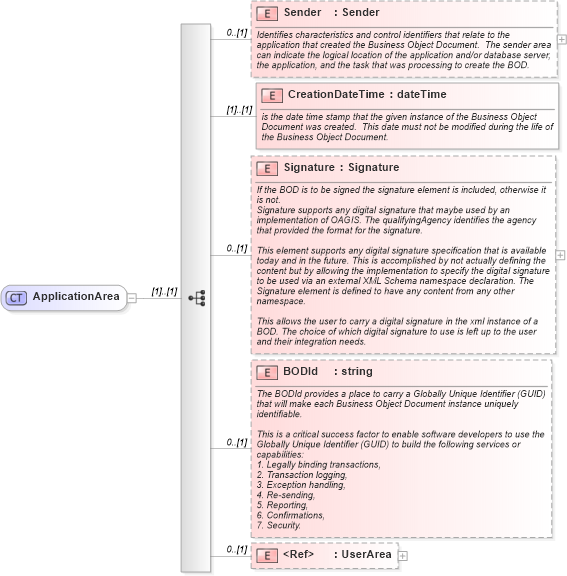
<xs:complexType name="ApplicationArea">
    <xs:sequence>
        <xs:element name="Sender" type="Sender" minOccurs="0">
            <xs:annotation>
                <xs:documentation source="http://www.openapplications.org/oagis">Identifies characteristics and control identifiers that relate to the application that created the Business Object Document.  The sender area can indicate the logical location of the application and/or database server, the application, and the task that was processing to create the BOD.</xs:documentation>
            </xs:annotation>
        </xs:element>
        <xs:element name="CreationDateTime" type="xs:dateTime">
            <xs:annotation>
                <xs:documentation source="http://www.openapplications.org/oagis">is the date time stamp that the given instance of the Business Object Document was created.  This date must not be modified during the life of the Business Object Document.
</xs:documentation>
            </xs:annotation>
        </xs:element>
        <xs:element name="Signature" type="Signature" minOccurs="0">
            <xs:annotation>
                <xs:documentation source="http://www.openapplications.org/oagis">If the BOD is to be signed the signature element is included, otherwise it is not.
Signature supports any digital signature that maybe used by an implementation of OAGIS. The qualifyingAgency identifies the agency that provided the format for the signature.

This element supports any digital signature specification that is available today and in the future. This is accomplished by not actually defining the content but by allowing the implementation to specify the digital signature to be used via an external XML Schema namespace declaration. The Signature element is defined to have any content from any other namespace.

This allows the user to carry a digital signature in the xml instance of a BOD. The choice of which digital signature to use is left up to the user and their integration needs.</xs:documentation>
            </xs:annotation>
        </xs:element>
        <xs:element name="BODId" type="xs:string" minOccurs="0">
            <xs:annotation>
                <xs:documentation source="http://www.openapplications.org/oagis">The BODId provides a place to carry a Globally Unique Identifier (GUID) that will make each Business Object Document instance uniquely identifiable.

This is a critical success factor to enable software developers to use the Globally Unique Identifier (GUID) to build the following services or capabilities:
1. Legally binding transactions,
2. Transaction logging,
3. Exception handling,
4. Re-sending,
5. Reporting,
6. Confirmations,
7. Security.</xs:documentation>
            </xs:annotation>
        </xs:element>
        <xs:element ref="UserArea" minOccurs="0" />
    </xs:sequence>
</xs:complexType>
|
 XSD Schema Diagram: