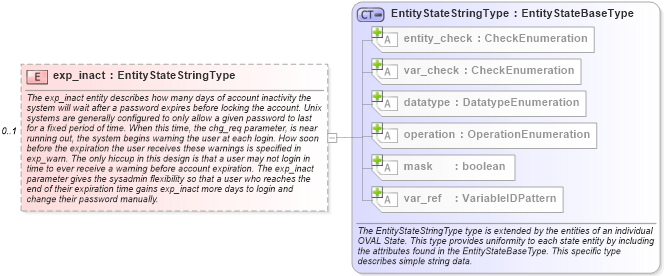
<xsd:element name="exp_inact" type="oval-def:EntityStateStringType" minOccurs="0" maxOccurs="1">
    <xsd:annotation>
        <xsd:documentation>The exp_inact entity describes how many days of account inactivity the system will wait after a password expires before locking the account. Unix systems are generally configured to only allow a given password to last for a fixed period of time. When this time, the chg_req parameter, is near running out, the system begins warning the user at each login. How soon before the expiration the user receives these warnings is specified in exp_warn. The only hiccup in this design is that a user may not login in time to ever receive a warning before account expiration. The exp_inact parameter gives the sysadmin flexibility so that a user who reaches the end of their expiration time gains exp_inact more days to login and change their password manually.</xsd:documentation>
        <xsd:appinfo>
            <sch:pattern id="shadowsteexp_inact" xmlns:sch="http://purl.oclc.org/dsdl/schematron">
                <sch:rule context="unix-def:shadow_state/unix-def:exp_inact">
                    <sch:assert test="not(@datatype) or @datatype='string'">
                        <sch:value-of select="../@id" /> - datatype attribute for the exp_inact entity of a shadow_state should be 'string'</sch:assert>
                </sch:rule>
            </sch:pattern>
        </xsd:appinfo>
    </xsd:annotation>
</xsd:element>
|
 XSD Schema Diagram: