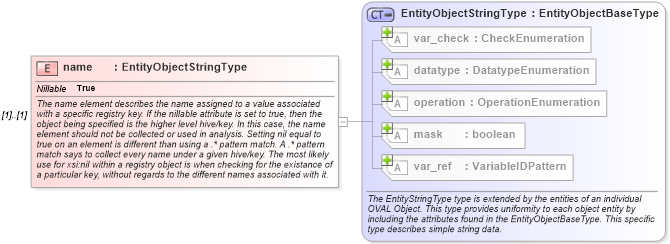
<xsd:element name="name" type="oval-def:EntityObjectStringType" nillable="true">
    <xsd:annotation>
        <xsd:documentation>The name element describes the name assigned to a value associated with a specific registry key. If the nillable attribute is set to true, then the object being specified is the higher level hive/key. In this case, the name element should not be collected or used in analysis. Setting nil equal to true on an element is different than using a .* pattern match. A .* pattern match says to collect every name under a given hive/key. The most likely use for xsi:nil within a registry object is when checking for the existance of a particular key, without regards to the different names associated with it.</xsd:documentation>
        <xsd:appinfo>
            <sch:pattern id="regobjname" xmlns:sch="http://purl.oclc.org/dsdl/schematron">
                <sch:rule context="win-def:registry_object/win-def:name">
                    <sch:assert test="not(@datatype) or @datatype='string'">
                        <sch:value-of select="../@id" /> - datatype attribute for the name entity of a registry_object should be 'string'</sch:assert>
                </sch:rule>
            </sch:pattern>
        </xsd:appinfo>
    </xsd:annotation>
</xsd:element>
|
 XSD Schema Diagram: