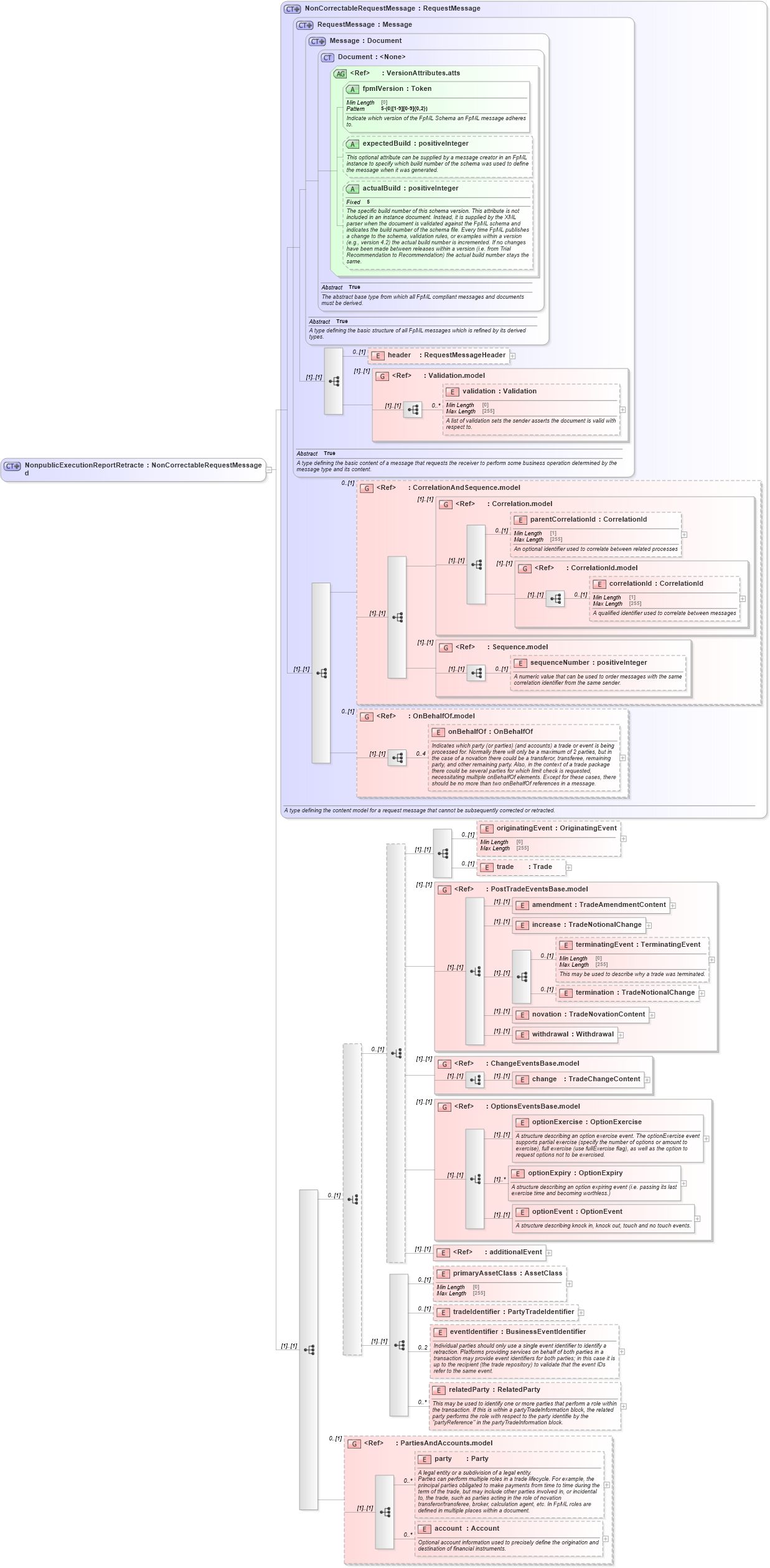
<xsd:complexType name="NonpublicExecutionReportRetracted">
    <xsd:complexContent>
        <xsd:extension base="NonCorrectableRequestMessage">
            <xsd:sequence>
                <xsd:choice minOccurs="0">
                    <xsd:choice minOccurs="0">
                        <xsd:sequence>
                            <xsd:element name="originatingEvent" type="OriginatingEvent" minOccurs="0" />
                            <xsd:element name="trade" type="Trade" minOccurs="0" />
                        </xsd:sequence>
                        <xsd:group ref="PostTradeEventsBase.model" />
                        <xsd:group ref="ChangeEventsBase.model" />
                        <xsd:group ref="OptionsEventsBase.model" />
                        <xsd:element ref="additionalEvent" />
                    </xsd:choice>
                    <xsd:sequence>
                        <xsd:element name="primaryAssetClass" type="AssetClass" minOccurs="0" />
                        <xsd:element name="tradeIdentifier" type="PartyTradeIdentifier" minOccurs="0" />
                        <xsd:element name="eventIdentifier" type="BusinessEventIdentifier" minOccurs="0" maxOccurs="2">
                            <xsd:annotation>
                                <xsd:documentation xml:lang="en">Individual parties should only use a single event identifier to identify a retraction. Platforms providing services on behalf of both parties in a transaction may provide event identifiers for both parties; in this case it is up to the recipient (the trade repository) to validate that the event IDs refer to the same event.</xsd:documentation>
                            </xsd:annotation>
                        </xsd:element>
                        <xsd:element name="relatedParty" type="RelatedParty" minOccurs="0" maxOccurs="unbounded">
                            <xsd:annotation>
                                <xsd:documentation xml:lang="en">This may be used to identify one or more parties that perform a role within the transaction. If this is within a partyTradeInformation block, the related party performs the role with respect to the party identifie by the "partyReference" in the partyTradeInformation block.</xsd:documentation>
                            </xsd:annotation>
                        </xsd:element>
                    </xsd:sequence>
                </xsd:choice>
                <xsd:group ref="PartiesAndAccounts.model" minOccurs="0" />
            </xsd:sequence>
        </xsd:extension>
    </xsd:complexContent>
</xsd:complexType>
|
 XSD Schema Diagram: