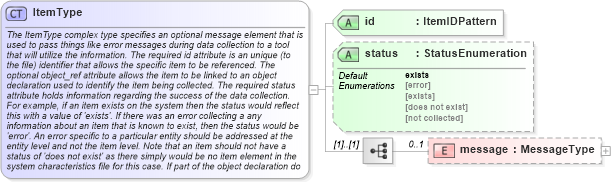
<xsd:complexType name="ItemType">
    <xsd:annotation>
        <xsd:documentation>The ItemType complex type specifies an optional message element that is used to pass things like error messages during data collection to a tool that will utilize the information. The required id attribute is an unique (to the file) identifier that allows the specific item to be referenced. The optional object_ref attribute allows the item to be linked to an object declaration used to identify the item being collected. The required status attribute holds information regarding the success of the data collection. For example, if an item exists on the system then the status would reflect this with a value of 'exists'. If there was an error collecting a any information about an item that is known to exist, then the status would be 'error'. An error specific to a particular entity should be addressed at the entity level and not the item level. Note that an item should not have a status of 'does not exist' as there simply would be no item element in the system characteristics file for this case. If part of the object declaration does not exist on the system (say a path exists but the filename does not), then no item should be written for this object and the object element in the collected_object section should have a flag value of 'does not exist'.</xsd:documentation>
    </xsd:annotation>
    <xsd:sequence>
        <xsd:element name="message" type="oval:MessageType" minOccurs="0" maxOccurs="1" />
    </xsd:sequence>
    <xsd:attribute name="id" type="oval:ItemIDPattern" use="required" />
    <xsd:attribute name="status" type="oval-sc:StatusEnumeration" use="optional" default="exists" />
</xsd:complexType>
|
 XSD Schema Diagram: